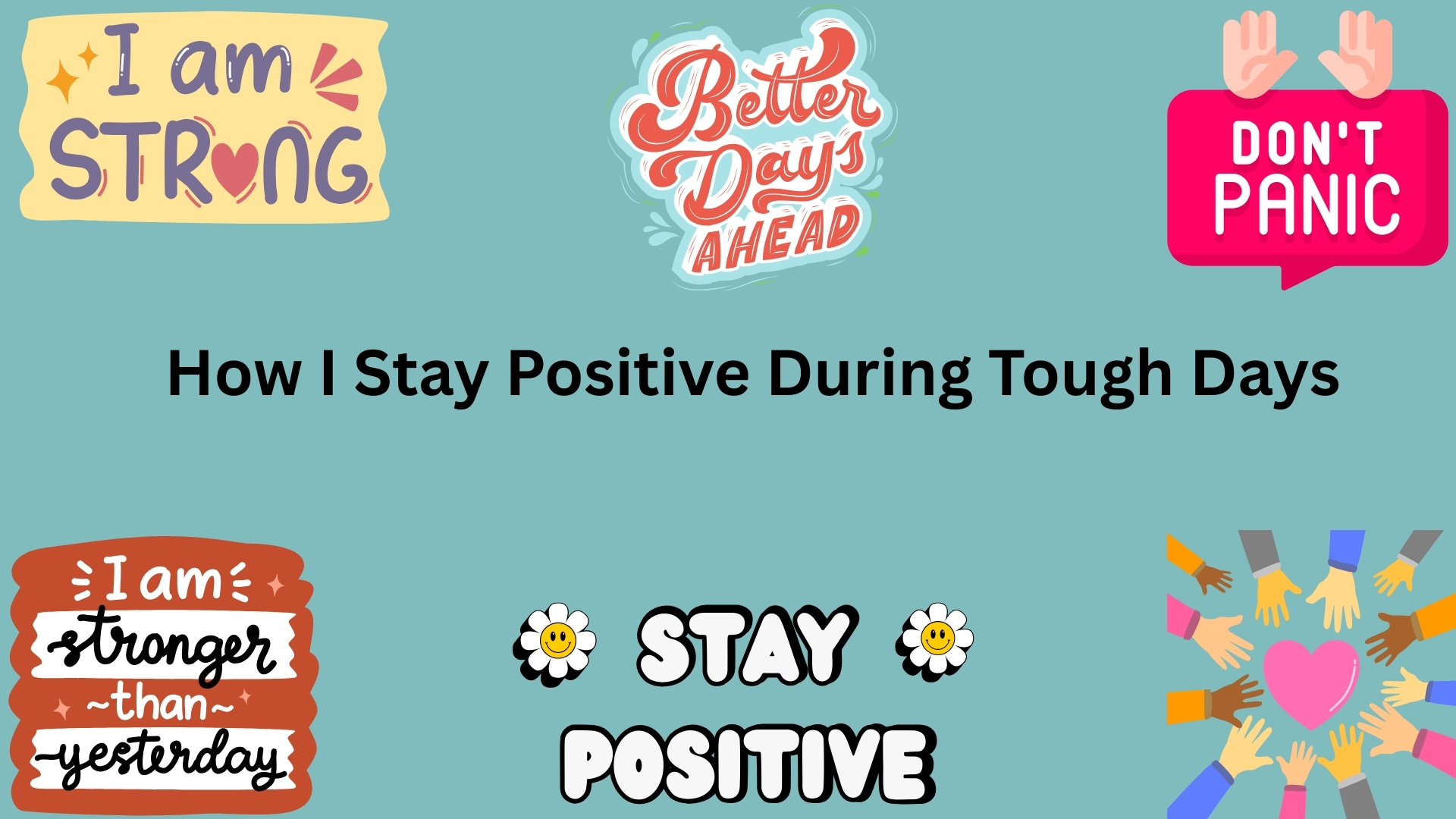
How I Stay Positive During Tough Days
We all have those days when everything feels a little too much. Whether it’s work stress, personal loss, relationship struggles, or just one of those inexplicable off-days, staying positive can feel like trying to hold water in your hands.
Over the years, I’ve learned that positivity doesn’t mean pretending everything’s okay. It’s not about ignoring pain or forcing a smile. Instead, it’s about choosing to focus on what helps, not what hurts, even when life feels heavy.
1. I Allow Myself to Feel Everything
Let me start with what I don’t do: I don’t force myself to smile when I feel like crying. I don’t suppress my emotions in the name of “positivity.” I used to believe that being positive meant staying upbeat no matter what, but experience has taught me otherwise.
Emotional honesty is crucial. On tough days, I allow myself to feel whatever comes up — sadness, anger, anxiety, frustration, or confusion. I don’t label these emotions as bad. I simply acknowledge them.
- I accept my emotions without judgment
- I stop pretending that I am fine when I am not
- I remind myself that emotions are temporary
That simple acknowledgment — “I’m having a hard time today” — often lifts a huge weight. Once I stop resisting my feelings, my mind feels clearer, and moving forward becomes possible.
2. I Start With One Small, Manageable Task
Tough days often come with a deep sense of overwhelm. Everything feels urgent, yet I have no energy to do anything. When that happens, I stop looking at the entire to-do list and focus on just one small task.
It could be something very simple, like making my bed, replying to one email, or even just brushing my teeth. It doesn’t need to be productive in the traditional sense. What matters is the feeling of completion.
- Doing one small task reduces mental pressure
- Small wins create momentum
- Action helps break the cycle of helplessness
That one small win often leads to another. And even if it doesn’t, I still count it as progress. Some days, doing one thing is more than enough.
3. I Lean On My Support System (Even When I Don’t Want To)
When I’m feeling low, my natural instinct is to isolate myself. I convince myself that nobody wants to hear my problems or that I should handle everything alone. But this mindset usually makes things worse.
Reaching out — even just to say “I’m not okay today” — can make a world of difference. I don’t always need advice or solutions. Sometimes, being heard is enough.
- Talking reduces emotional burden
- Support reminds me that I am not alone
- Connection brings comfort and clarity
I’ve learned that vulnerability is not weakness. It’s a form of courage. Allowing others to support me helps me heal faster than struggling in silence.
4. I Limit Negative Inputs
On difficult days, my mind is already overloaded. Constant exposure to bad news, social media comparisons, or negative conversations only adds fuel to the fire.
I make a conscious effort to limit what I consume. I mute unnecessary notifications, take breaks from social media, and avoid content that drains me emotionally.
- I reduce screen time when I feel overwhelmed
- I avoid comparing my life to others online
- I choose content that calms rather than agitates
Protecting my mental space allows me to breathe, reset, and regain emotional balance. Sometimes, silence itself is healing.
5. I Remind Myself That This Is Temporary
When you’re in the middle of a tough day, it can feel like the pain will never end. My thoughts tend to exaggerate the situation, making everything feel permanent.
I gently remind myself that feelings change. Just because today is hard does not mean tomorrow will be the same. I’ve survived difficult moments before, and I will survive this one too.
- Hard days do not define my life
- Emotions rise and fall naturally
- Past struggles prove my resilience
This reminder doesn’t erase the pain, but it gives me hope — and hope makes everything feel lighter.
6. I Practice Self-Kindness Instead of Self-Criticism
On tough days, I don’t expect myself to be strong, productive, or perfect. I stop using harsh self-talk and start treating myself the way I would treat someone I love.
I allow rest without guilt. I forgive myself for doing less. I remind myself that worth is not measured by productivity.
- I speak to myself with compassion
- I allow rest and recovery
- I stop demanding perfection
Self-kindness doesn’t fix everything instantly, but it creates a safe space where healing can begin.
Final Thoughts
Staying positive during tough days doesn’t mean ignoring pain or forcing happiness. It means choosing gentleness over judgment, awareness over avoidance, and hope over despair.
Some days, positivity looks like deep breaths, quiet moments, and simply getting through the day — and that is enough.
If today feels heavy for you, remember this: you are not weak, you are human. Tough days come and go, but you are stronger than you think.